



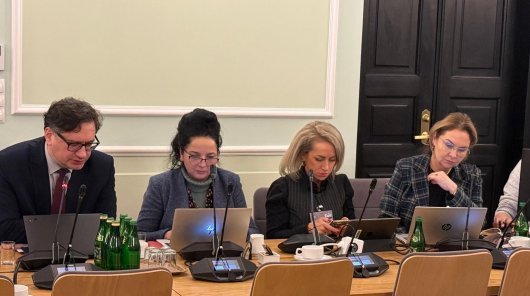
Meeting of the President of the Personal Data Protection Office with the Labour Protection Council
On 19 January 2026, a meeting was held in the Sejm (lower chamber of the Parliament) with the Labour Protection Council, devoted to issues of personal data protection in the context of labour law and the challenges arising from the development of new technologies.
The meeting was attended by: Mirosław Wróblewski, President of the Personal Data Protection Office; Monika Krasińska, Director of the Law and New Technologies Department of the Personal Data Protection Office; and Dominika Dorre-Kolasa, PhD from the Social Team of Experts to the President of the Personal Data Protection Office. The participants presented the Office’s position on current and future problems related to workplace monitoring, the protection of employees’ privacy, and the need to adapt legislation to technological realities.
The discussion highlighted the need to maintain an appropriate balance between employers’ interests and employees’ rights and freedoms, as well as to ensure coherent and transparent legal frameworks for the use of modern surveillance tools.
Dominika Dorre-Kolasa, PhD discussed the issue of so‑called “other forms of monitoring”, which are only rudimentarily regulated in the Labour Code. She pointed out the lack of a statutory definition and the fact that a wide range of technologies are used within such monitoring – from simple system logs to advanced analytics based on artificial intelligence – all of which are currently covered by a single, general provision of the Code. Possible directions for legislative changes were indicated, including the need to introduce separate regulations for specific forms of monitoring (e.g. IT systems, mobile devices, GPS) and to clarify the principles of transparency and proportionality.
Attention was also drawn to the risks associated with the current regulations – both for employees (excessive intrusion into privacy, lack of transparency) and for employers (ambiguous legal basis, inconsistent practice, risk of disputes and reputational damage). It was emphasised that the current wording of the Labour Code provisions, in particular Article 22(3), does not keep pace with the dynamic development of monitoring technologies.
The meeting constituted an important contribution to the ongoing debate on the direction of future legislative work in the field of personal data protection and labour law.